
Home Venous Insufficiency
ConditionsChronic Venous Insufficiency, Explained Simply
Chronic venous insufficiency (CVI) means your leg veins struggle to send blood back to your heart. It can cause aching, swelling, skin changes and ulcers, and a vein doctor can test for it in about an hour.
What CVI is
Veins have one-way valves that keep blood moving up toward the heart. When they stop working well, blood pools in the legs. FCCI says CVI affects about 25 million Americans, roughly 5% of the U.S. population.
CVI is not just another word for varicose veins. FCCI notes it can involve hereditary factors, hormones, trauma and past deep vein thrombosis.
Why it is worth treating
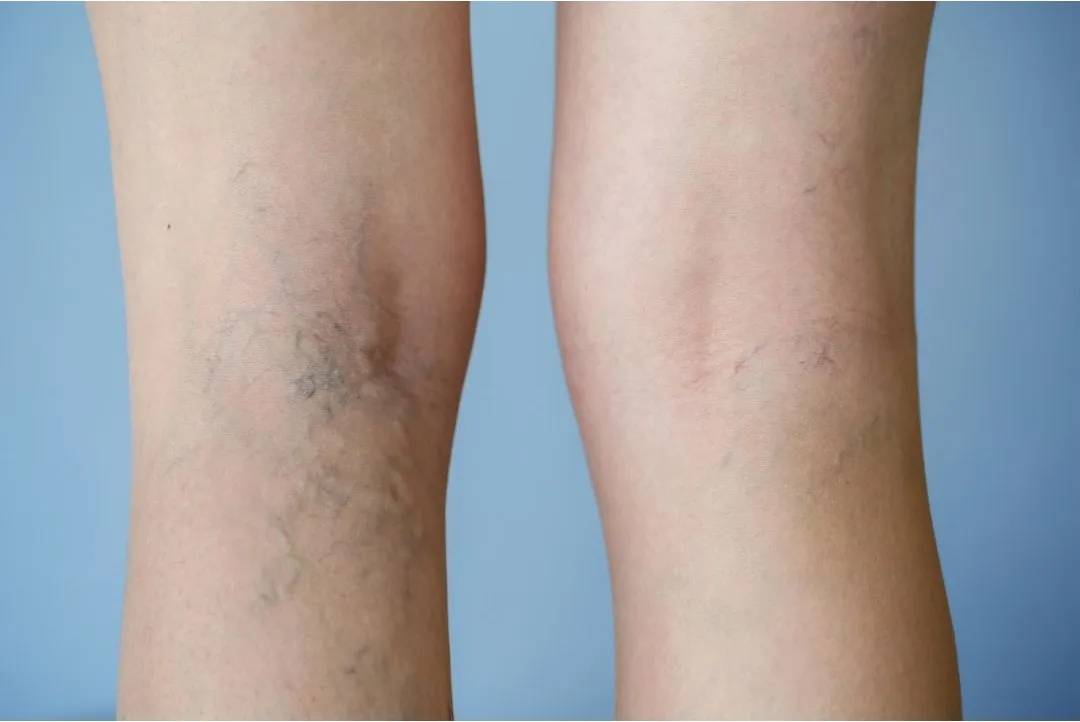
FCCI warns that untreated CVI can lead to edema, chronic and even life-threatening infections of the lower legs, and blood clots. It can also cause leg pain, skin changes and ulcers. Most people notice it first as legs that feel heavy or tired by evening.
- Pain when standing that eases when legs are raised
- Swelling around ankles
- Red or brown skin changes
- Sores that are slow to heal
How it is diagnosed
FCCI's accredited vascular lab runs a Venous Insufficiency Exam. A venous duplex ultrasound checks which way blood is flowing to see if valves are working, and finds abnormal or blocked segments. A full study may include both legs and usually takes about 1 hour.
For deeper problems, FCCI also offers intravascular ultrasound (IVUS), venography, venoplasty and stents.
Is CVI dangerous?
It can be if ignored. FCCI notes it can lead to edema, serious leg infections and blood clots.
How is it tested?
With a venous duplex ultrasound in FCCI's accredited vascular lab, usually about 1 hour for a full study.
Can CVI be treated without surgery?
FCCI offers minimally invasive options. Your vein doctor will explain what fits your results.