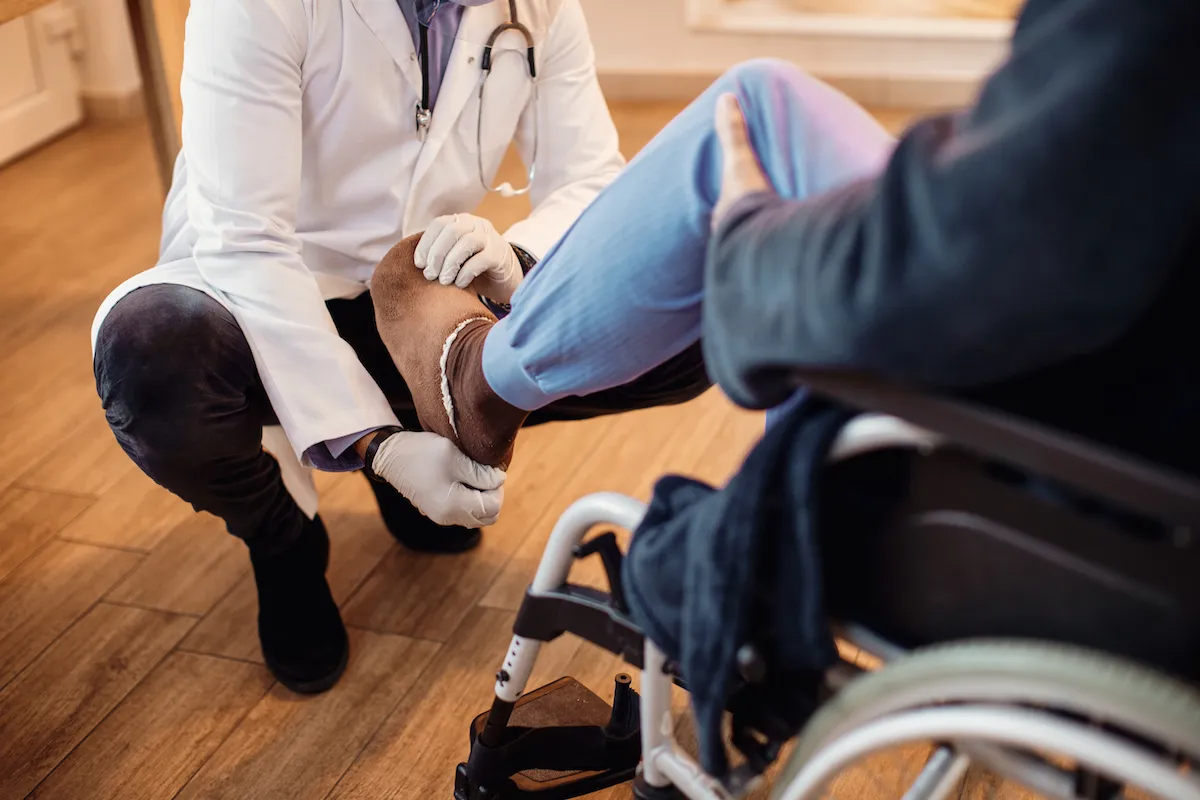
If your leg veins ache, swell, itch or bulge, start with a vein doctor. A vascular physician can see what is happening under the skin with an ultrasound and treat the source, not just the surface. A skin doctor is a great fit for rashes, moles and many skin conditions, but the reason a vein bulges usually lives deeper than the skin.
Why the cause is often deeper
Veins carry blood back to your heart. Inside them are small one-way valves. When those valves get weak, blood slides backward and pools, and veins stretch. That is how many varicose veins form. First Coast Cardiovascular Institute (FCCI) calls this venous insufficiency and notes it can lead to leg pain, swelling, skin changes and ulcers if left alone.
You cannot see a leaky valve from the outside. You can see it on a venous duplex ultrasound, which shows the direction blood is moving in each vein segment. That test lives in a vascular lab, and FCCI's lab is accredited by the Intersocietal Accreditation Commission.
What a vein doctor checks that others may not
- How well your valves work, segment by segment
- Whether a deep vein is blocked or compressed
- Signs of a past or current blood clot
- Your other risk factors, like heart, lung or sleep problems
FCCI describes a full assessment of your risk factors, signs and symptoms, beyond your vein health. That last part is easy to miss. Leg swelling is not always a vein problem, and FCCI keeps cardiovascular, sleep medicine, wound care and pulmonary specialists under the same roof in case the answer is somewhere else.
When a cosmetic visit is enough
Some people just do not like how spider veins look, and that is a fine reason to come in. FCCI calls its approach 360 degrees, from chronic leg pain to cosmetic appearance. It offers sclerotherapy, a chemical ablation that eliminates the look of spider veins and smaller reticular veins.
Even for cosmetic veins, a quick check makes sense. Spider veins sometimes travel with deeper leaks, and treating only the surface can leave the real cause in place.
Who you will meet at FCCI
FCCI says its Vein Clinic is the only one in Northeast Florida to house a team of board certified endovascular and vascular physicians. That includes Dr. Yazan Khatib, FCCI's President, who completed extra training in endovascular care of leg vessels, and Dr. Rabih Tabet, an interventional and vascular cardiologist trained in Vascular Medicine and Interventions at Yale New Haven Hospital. The ultrasound team works under Dr. Jason Roberts, a Registered Vascular Technologist and technical director of FCCI's non-invasive vascular services.
A simple rule of thumb
If it hurts, swells, itches or changes color, see a vein doctor. If it only bothers you in shorts, a vein doctor can still help and can make sure nothing deeper is going on. Either way, you leave knowing what is really happening inside your legs, which beats guessing in the mirror.
About the Vein Clinic at FCCI
Not sure whose office to call? FCCI has looked after Northeast Florida legs since 2002, and its Vein Clinic is home to a team of board certified endovascular and vascular physicians, something FCCI says no other clinic in the region can claim. If the problem turns out to be more than skin deep, or not in the veins at all, heart, sleep, wound care and lung specialists are in the same building.
The ultrasound that tells skin trouble from vein trouble is done by registered vascular technologists in an IAC accredited lab. Treatment stays outpatient, which FCCI says keeps the bill lower and the day simpler.
Getting ready for your visit
- Call 904.493.3333 to book, Monday to Friday, 8 a.m. to 5 p.m.
- Before a skin-or-vein visit, grab the New Patient Registration form on FCCI's Patient Resources page
- Bring your ID, insurance card and a list of your medicines
- Wear shorts or loose pants so your legs are easy to check
- Write down when symptoms started and what makes them better or worse
- Need to reschedule? FCCI asks for at least 24 hours' notice
Photos of your spider veins and your health history are best saved for the exam room or a phone call, not a web form.
Still torn between a skin doctor and a vein doctor? Call FCCI at 904.493.3333 (weekdays, 8 to 5) or use the Book page, and ask for the free 20-minute vein screening at 7011 AC Skinner Parkway, Ste 160 on the Southside. Sudden leg swelling with chest pain or trouble breathing is a 911 call, not a scheduling call.