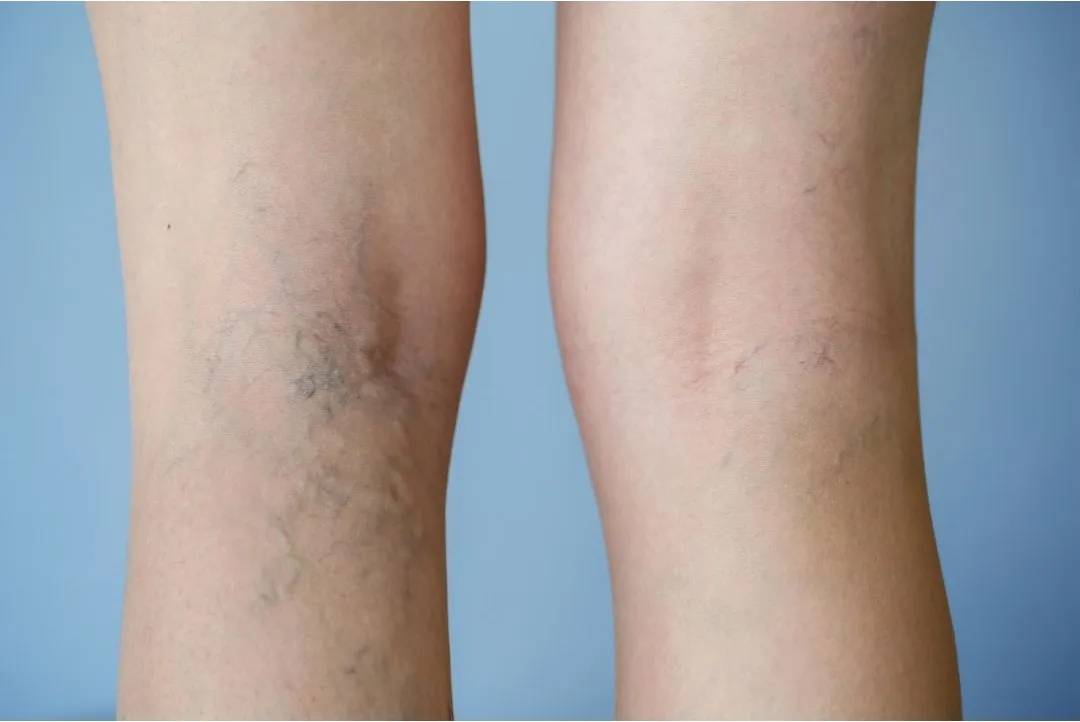
Spider veins are small blood vessels that collect close to the surface of the skin. They are very common and usually not dangerous. First Coast Cardiovascular Institute (FCCI) treats them with sclerotherapy. A vein doctor can also check whether they are part of a bigger valve problem underneath.
Spider vs. reticular vs. varicose
- Spider veins: tiny vessels near the skin's surface that give the skin a distorted look
- Reticular veins: similar to varicose veins but smaller and deeper, often blue or green, and they often form into spider veins
- Varicose veins: twisted, bulging veins
These can show up alone or together. FCCI lists spider and reticular veins among superficial vein signs.
Why they show up
Veins are common trouble spots. FCCI shares that 50% of women and 40% of men suffer from a venous problem. Family history, hormones and long hours on your feet all play a part in vein health, and FCCI notes hereditary and hormonal factors among the causes of chronic venous insufficiency.
How FCCI treats them
FCCI says it can eliminate the appearance of spider veins through chemical ablation, known as sclerotherapy. It treats reticular veins with minimally invasive procedures such as sclerotherapy too. Your vein doctor will explain how many sessions you might need and what to expect afterward.
Why see a vein doctor and not just book a treatment
Spider veins on their own are often cosmetic. But if they come with aching, swelling or skin color changes, there may be a deeper leak feeding them. A quick ultrasound can show that. Treating the source first can make cosmetic results last longer. FCCI's free vein screening ultrasound takes about 20 minutes.
Questions to ask at your visit
- Are my spider veins connected to a deeper vein problem?
- Is sclerotherapy right for me?
- How many sessions might I need?
- What does my insurance cover for this?
- What should I avoid right after treatment?
Write them on your phone before the visit. It is easy to forget once you are sitting on the exam table.
About the Vein Clinic at FCCI
Spider veins are FCCI's territory too. The practice has been in Northeast Florida since 2002, and its Vein Clinic, staffed by board certified endovascular and vascular physicians, covers everything from cosmetic veins to chronic leg pain. Cardiology, sleep, wound care and lung specialists share the building if anything else comes up.
If your doctor wants to look below the spider veins, the scan happens in an IAC accredited lab with registered vascular technologists. Sclerotherapy and other vein care are done outpatient.
Getting ready for your visit
- Call 904.493.3333 to book, Monday to Friday, 8 a.m. to 5 p.m.
- Download the New Patient Registration form from Patient Resources before your spider vein visit
- Bring your ID, insurance card and a list of your medicines
- Wear shorts or loose pants so your legs are easy to check
- Write down when symptoms started and what makes them better or worse
- Need to reschedule? FCCI asks for at least 24 hours' notice
Skip sending photos or health details through online forms. Bring them to your visit or talk them through by phone.
Ready to do something about those spider veins? Call 904.493.3333, weekdays 8 a.m. to 5 p.m., or request a visit on our Book page, and ask about the free 20-minute vein screening at FCCI's Southside office, 7011 AC Skinner Parkway, Ste 160. If you ever get sudden leg swelling with chest pain or shortness of breath, call 911.